
[About | Programme | Training | Researchers | Supervisors | Team | Student Guide | FAQ]
|
|
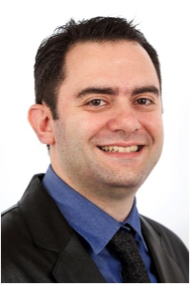
Univ.Prof. Dr. Ezio BartocciInstitute of Computer Engineering Research Areas: Verification of Cyber-Physical Systems, Probabilistic Program Analysis, Runtime Verification [bg_collapse view=”link” color=”#22168c” expand_text=”Scientific Background” collapse_text=”Show Less” ]Ezio Bartocci is full professor for Formal Methods in Cyber-Physical Systems Engineering. The primary focus of his research is to develop formal methods, computational tools and techniques that support the modeling and the automated analysis of complex computational systems, including software systems, cyber-physical systems and biological systems.[/bg_collapse] |
|
|
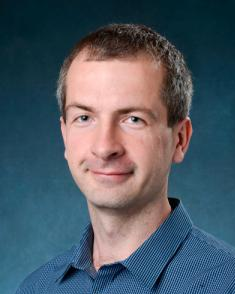
Univ.Prof. Pavol Cerny, PHDInstitute of Logic and Computation Research Area: Computer-Aided Verification [bg_collapse view=”link” color=”#22168c” expand_text=”Scientific Background” collapse_text=”Show Less” ]Pavol Cerny is full professor for Computer Aided Verification. His research area is computer-aided verification and he focuses on program synthesis. He has recently worked on applications in networking, artificial intelligence, and software engineering.[/bg_collapse] |
|
|
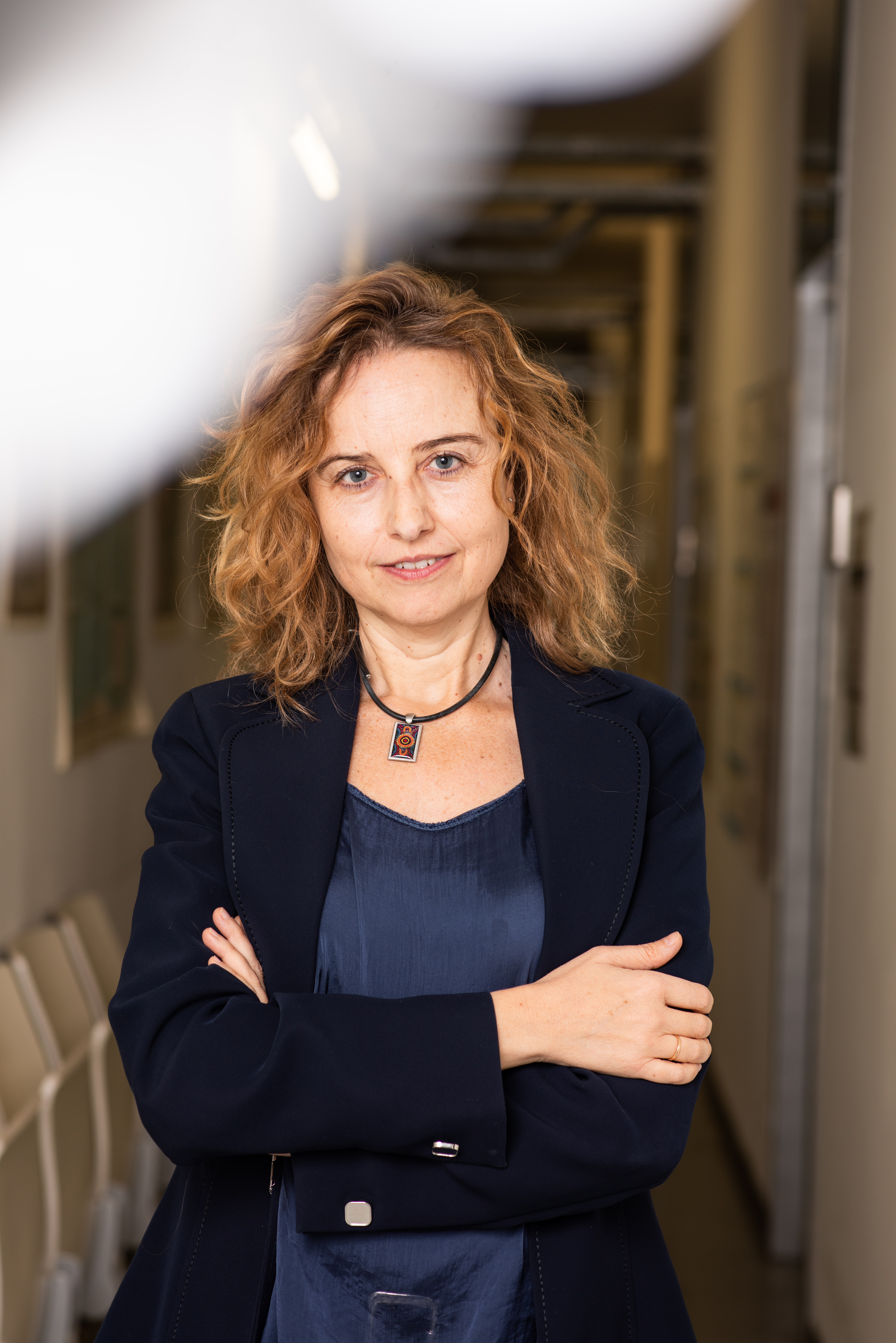
Univ.Prof. Dr. Agata CiabattoniInstitute of Logic and Computation Research Areas: Mathematical Logic, Formal Methods, Normative Reasoning [bg_collapse view=”link” color=”#22168c” expand_text=”Scientific Background” collapse_text=”Show Less” ]Agata Ciabattoni is full professor for Non-Classical Logics in Computer Science. Her research focuses on logics different from classical logic. She investigates their theory (proof theory&semantics), tools and applications in various fields ranging from philosophy to AI. In 2011, she received the prestigious START award from the Austrian Science Fund.[/bg_collapse] |
|
|
O.Univ.Prof. Dipl.-Ing. Dr.techn. Thomas EiterInstitute of Logic and Computation (Head) Research Areas: Knowledge Representation and Reasoning, Declarative Problem Solving, Artificial Intelligence [bg_collapse view=”link” color=”#22168c” expand_text=”Scientific Background” collapse_text=”Show Less” ]Thomas Eiter is full professor for Knowledge-Based Systems. His main research interests are with knowledge representation and reasoning, logic and computation, and declarative problem solving. He is ACM fellow and fellow of the European Association for Artificial Intelligence.[/bg_collapse] |
|
|
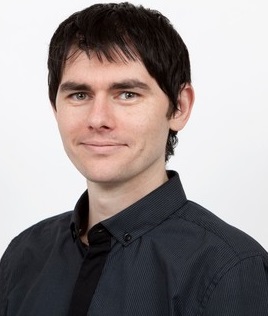
Privatdoz. Robert Ganian, PhDInstitute of Logic and Computation Research Areas: Parameterized Complexity, Exact Algorithms, Artificial Intelligence [bg_collapse view=”link” color=”#22168c” expand_text=”Scientific Background” collapse_text=”Show Less” ]Robert Ganian is an expert in parameterized complexity theory whose work focuses on understanding the exact boundaries of tractability for problems which arise in artificial intelligence. In 2020 he received a START award from the Austrian Science Fund and is also the principal investigator of several other research projects.[/bg_collapse] |
|
|
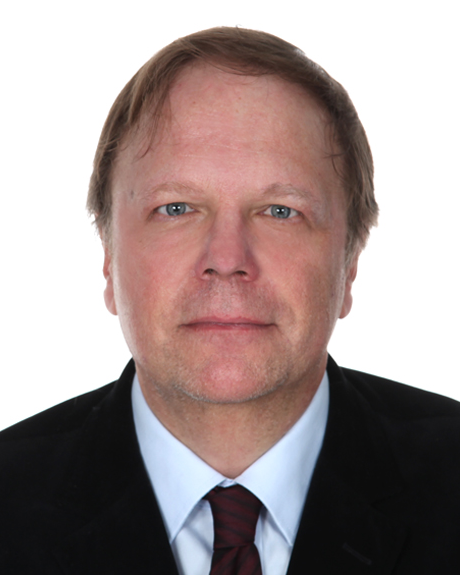
O.Univ.Prof. Dipl.-Ing. Dr.techn. Georg GottlobInstitute of Logic and Computation Research Areas: Web Data Extraction, Constraint Satisfaction, Computational Logic, Data Bases, [bg_collapse view=”link” color=”#22168c” expand_text=”Scientific Background” collapse_text=”Show Less” ]Georg Gottlob is adjunct professor at TU Wien. His work focuses on basic research in Computer Science, in particular on “Database Theory and Knowledge Representation” as well as on applied research on web data extraction. He is professor at the University of Oxford, member of the Royal Society and recipient of the Wittgenstein Award. [/bg_collapse] |
|
|
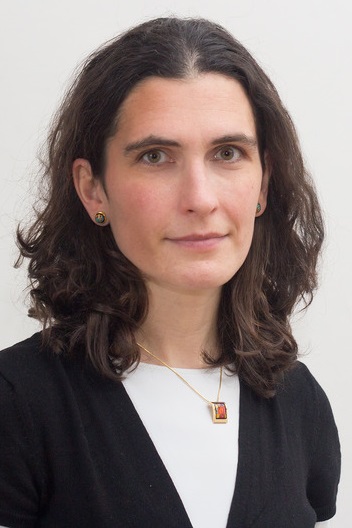
Univ.Prof. Dr.techn. Laura Kovács, MSc.Institute of Logic and Computation Research Areas: Automated Reasoning, Software Verification, Symbolic Computation [bg_collapse view=”link” color=”#22168c” expand_text=”Scientific Background” collapse_text=”Show Less” ]Laura Kovács works on developing new techniques for automating reasoning about program. She is the co-developer of the Vampire theorem prover and a Wallenberg Academy Fellow of Sweden. Her research has been awarded with a ERC Starting Grant 2014, an ERC Proof of Concept Grant 2018 and an ERC Consolidator Grant 2020 of the European Research Council (ERC).[/bg_collapse] |
|
|
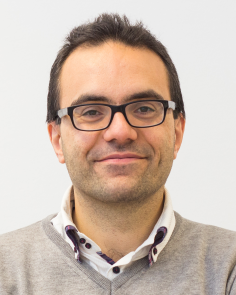
Univ.Prof. Matteo MaffeiInstitute of Logic and Computation Research Areas: Formal Methods for Security and Privacy, Applied Cryptography, Cryptocurrencies, Web Security [bg_collapse view=”link” color=”#22168c” expand_text=”Scientific Background” collapse_text=”Show Less” ]Matteo Maffei is full professor and head of the Security and Privacy research unit at TU Wien. His research interests include formal methods for security and privacy, applied cryptography, cryptocurrencies, and web security. For his research, he received the prestigious Emmy Noether Fellowship and an ERC Consolidator grant.[/bg_collapse] |
|
|
Associate Prof. Dr.techn. Magdalena Ortiz, MScInstitute of Logic and Computation Research Areas: Knowledge Representation and Reasoning with particular emphasis in Description Logics [bg_collapse view=”link” color=”#22168c” expand_text=”Scientific Background” collapse_text=”Show Less” ]Magdalena Ortiz is associate professor for Knowledge Representation and Reasoning. She is a former FWF Hertha-Firnberg fellow and works at the intersection of artificial intelligence, databases and semantic systems. Her research group studies Description Logics and related logic-based formalisms for representing knowledge, and their applications in intelligent and reliable data management.[/bg_collapse] |
|
|
Univ.Prof. Mag.rer.nat. Dr.rer.nat. Stefan SzeiderInstitute of Logic and Computation Research Areas: Combinatorial Optimization, Automated Reasoning, Algorithms, Satisfiability, computational complexity, Fixed Parameter Tractability, Constraint satisfaction, Artificial Intelligence, Networks [bg_collapse view=”link” color=”#22168c” expand_text=”Scentific Background” collapse_text=”Show Less” ]Stefan Szeider is a full professor in Computer Science, head of the Algorithms and Complexity Group and founding co-chair of the Vienna Center for Logic and Algorithms. His ERC-funded research combines algorithmic and logic-based methods to solve hard computational problems in AI, Automated Reasoning, and Optimization. He complements efficient algorithms with complexity-theoretic limits and lower bounds.[/bg_collapse]
|
|
|
Univ.Prof. Dipl.-Ing. Georg Weissenbacher, D.Phil.Institute of Logic and Computation Research Areas: Automated Software Verification [bg_collapse view=”link” color=”#22168c” expand_text=”Scientific Background” collapse_text=”Show Less” ]Georg Weissenbacher is full professor for Rigorous Systems Engineering. His research interests include the automated verification of software and hardware. He is working on automated program analysis tools that use techniques such as model checking and decision procedures to prove (or disprove) the correctness of software.[/bg_collapse]
|
|
|
Univ.Prof. Dipl.-Ing. Dr.techn. Stefan WoltranInstitute of Logic and Computation Research Areas: Propositional Logic, Nonmonotonic Reasoning, Argumentation, Knowledge Representation, Logic Programming [bg_collapse view=”link” color=”#22168c” expand_text=”Scientific Background” collapse_text=”Show Less” ]Stefan Woltran is full professor of Foundations of Artificial Intelligence and head of the research unit Databases and AI. His research focuses on problems in the area of knowledge representation and reasoning, argumentation, and complexity analysis in AI. In 2013, he received the prestigious START award from the Austrian Science Fund. Since 2018 he is a fellow of the European Association for Artificial Intelligence.[/bg_collapse]
|
|
|
Associate Prof. Dipl.-Math. Dr.techn. Florian ZulegerInstitute of Logic and Computation Research Areas: Verification, Program Analysis, Formal Methods, Logic in Computer Science [bg_collapse view=”link” color=”#22168c” expand_text=”Scientific Background” collapse_text=”Show Less” ]Florian Zuleger is Associate Professor at TU Wien. His research focuses on automated methods for termination and resource-bound analysis, verification of heap-manipulating programs, parameterized verification of concurrent and distributed systems, and automated feedback generation for introductory programming assignments.[/bg_collapse] |
Funding
This project has received funding from the European Union’s Horizon 2020 research and innovation programme under the Marie Skłodowska-Curie
grant agreement No 101034440.